
Video analytics for business security: what it does and where it fits
What video analytics can and cannot do for business security — the detections it actually delivers, why human monitoring matters, and how it fits retail, warehouse and factory sites.
By Knighthood Team
Published 8 June 2023
Updated 24 August 2026
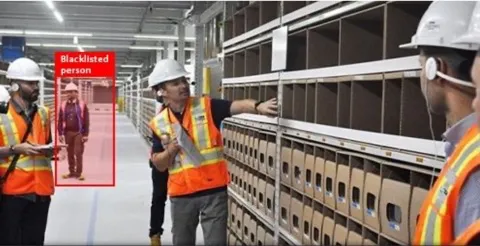
Video analytics uses software to make sense of CCTV footage automatically. Instead of a person watching a bank of screens, algorithms identify people, vehicles, objects and events in the video stream and raise alerts when something happens. The right question for a buyer is not “is video analytics good?” but “what should it detect on my site, and who verifies the alerts?”
What video analytics can actually do
A well-configured video-analytics system can detect a specific set of events and raise alerts:
- Intrusion and perimeter breaches
- Fire and smoke detection
- People detection and headcounts (crowd density, occupancy, loitering)
- Vehicle detection, including number-plate recognition
- Object detection (bags, packages, weapons, unidentified objects)
- Person collapse detection
- PPE checks (hard hat, jacket, face mask)
- Guard-presence checks during patrols, and missing equipment alerts
Different algorithms cover different ground. Fixed-algorithm analytics are deterministic and predictable; machine-learning systems improve with data; facial recognition identifies known people (with serious privacy considerations). Decide the events that matter for your site before you choose a product, otherwise you buy capability you will not use.
Human monitoring is part of the system
Machine learning is not perfect. Algorithms produce false positives — a shadow read as a person, a balloon read as fire, a visitor read as an intruder. An alert that cannot be verified either wastes your team’s time or gets ignored, and an ignored alert is worse than no alert at all.
This is why analytics is usually paired with human review. A monitoring team watches the alerts the algorithm raises, verifies whether they are genuine, and decides the response — dismiss the false alarm or escalate to on-site guards, the police or the site team. The feedback loop also improves the algorithm over time. Plan for the human layer in the operating model, not just the cameras.
Local or cloud processing
Video can be analysed locally (on-premise server/DVR) or in the cloud (uploaded to a provider). Local processing keeps the data on site; cloud processing scales when you have many sites or feeds, and avoids computing bottlenecks as cameras grow. Cost, privacy, latency and scale decide the right architecture. Confirm which one the provider recommends for your site count rather than accepting a default.
Where video analytics fits
Retail. Detection for shoplifting and known offenders, footfall analysis for staffing and layout, and monitoring of sales-floor areas. The value is as much operational (which hours need staff, which layout sells) as security.
Warehouse and logistics. Analytics gives round-the-clock coverage of large yards and racking that one or two guards cannot see at once, detects intrusion and unauthorized access, and monitors safety issues (vehicles near pedestrians, spills, blocked exits). It can reduce the amount of patrol walking a site needs while covering more ground.
Factory and manufacturing. The highest-value use is safety: PPE compliance, machine-area monitoring, fire and leak detection, and detecting unsafe worker behaviour before it becomes an accident. This reduces injuries and supports safety-regime compliance.
CCTV alone is not the answer
CCTV works far better as part of a layered setup than as a point solution. Monitored cameras with human oversight perform better than passive recording, and combining cameras with guarding, patrol and access control produces better results than any single measure alone. The cameras are one layer; the plan around them is what reduces crime.
What to check before you buy
- The events you need — intrusion? safety/PPE? footfall? Confirm the vendor’s detection list covers them.
- The monitoring layer — who watches the alerts, and what is the response path for a genuine alert?
- Reporting — you want reports and dashboards that show trends and exceptions, not just a camera feed.
- Privacy and compliance — face recognition and people-tracking carry privacy obligations; confirm the design is defensible for your jurisdiction.
- Integration — does the system connect to access control and the guard-reporting layer, or is it a separate island?
For the full picture on how surveillance fits a guarded site, see security services. If you are evaluating video analytics for specific sites, send us the site type, the events you want detected and the current guarding model, and we will confirm how analytics and monitoring fit your operation.
Send the requirement
If this post points at a decision you are close to making, send us the scope — sites, roles and shifts — and we will confirm the licence, supervision and commercial position for your situation.
Discuss your requirement