
Retail security: cutting theft and loss across stores
Where retail loss actually comes from, why visible security and trained staff matter, and the practical measures — CCTV, access control, staff training, returns policy and cash handling — that cut shrinkage in stores.
By Knighthood Team
Published 22 March 2023
Updated 24 August 2026
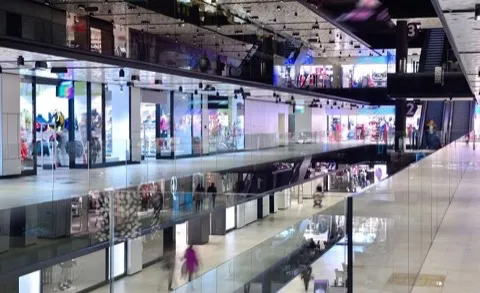
Retail loss comes from more than the shoplifter at the door. A store that treats security as a single fix — a camera here, a guard at the entrance — misses most of the problem. Loss has three drivers, and they need three different answers:
- External — shoplifting and organised theft at the front of the store
- Internal — employee theft and collusion in the back of the store
- Administrative and process — paperwork errors, pricing mistakes, returns fraud and counting errors that lose money without a thief involved
A strategy aimed at any one driver alone is not enough. The measures below work as a set.
Visible security: the guard at the door
Uniformed guards deter before a theft happens. Criminals scout a site; a visible guard makes them think twice. Guards also provide the other half of retail security that hardware cannot:
- Customer and employee safety — a trained guard de-escalates conflicts and responds in an emergency (many are first-aid trained).
- Asset protection — monitoring the premises and spotting suspicious behaviour before it becomes a loss.
- Better customer service — a good guard is also the person who answers questions and helps, which keeps the shopping experience intact.
Guards are the human layer; CCTV and access control are the evidence layer. They work together.
The practical measures that cut loss
CCTV, access control and anti-theft tags
A store security system should include CCTV, alarms, access control on stockrooms and cash areas, anti-theft tags and sensors, plus fire extinguishers and emergency lighting. The point is not more cameras; it is coverage of the store and the back areas where the real losses happen, with someone able to respond to an alert.
Train staff to see and serve
Your staff are the first line of defence. Train them to spot common shoplifting tactics — concealing merchandise, switching price tags, fake receipts, teams that distract — and to notice suspicious behaviour. And train them on the other side of it: engaging customers in a friendly way. Approachable service not only sells; it discourages shoplifters who do not want to be noticed.
Make the returns policy a control
Returns and refunds are exploited by fraudsters returning stolen goods for cash. Set a policy that specifies the conditions (original receipt required), the time limit, the refund mode (store credit where sensible) and the exceptions. Track inventory at the point of sale so you can verify whether an item was purchased from your store.
Secure the cash and the card reader
Registers and payment terminals are prime targets. Keep only minimal cash in each drawer, transfer excess to the safe, lock the drawers, put protective covers on card readers, use encrypted point-of-sale systems, and monitor transactions for anomalies.
Store sensitive data off-site
Keep client and card data — on hard drives or paper — off the premises in a safe location. Then a break-in at the store does not become a data breach.
Plan for the festival surge
The festival shopping season multiplies everything: footfall, cash, stock and theft. Prepare before the surge: more coverage at peak hours, extra verification on temporary staff, a faster cycle of cash-to-safe transfers, and a briefed team who know the seasonal tactics — team shoplifting, returns fraud, and crowded-store distraction. The season is when the measures above pay for themselves.
Loss prevention as a discipline
Most retail loss is not a single dramatic theft; it is accumulated shrinkage from many small, repeatable events. Loss prevention is the discipline of closing those routes: CCTV placed where it deters and records, access control on storage and stock rooms, and staff trained on what to look for, how to report suspicious activity, and how to respond when an incident happens. Add remote monitoring where a store has quiet hours, and you have a chain that catches loss early instead of discovering it in the stocktake.
A loss-prevention plan is only as good as its assessment: the points where goods leave the premises, the controls at each, and the gap between them. If you are not sure where your shrinkage is coming from, start there before adding more cameras.
The bottom line
Retail security is a stack, not a single product: visible guards, monitored CCTV and access control, trained staff, a strict returns policy, secure cash handling and safe off-site data. Each layer removes an avenue of loss; together they are what actually cut shrinkage.
For help securing a store or a retail chain, send us the locations and the loss pattern, and we will confirm the right mix of guarding and technology for your business — see security services, the retail industry page, and what a security guard costs.
Send the requirement
If this post points at a decision you are close to making, send us the scope — sites, roles and shifts — and we will confirm the licence, supervision and commercial position for your situation.
Discuss your requirement