
School security: how a security agency helps
What a security agency does for a school — guards and campus patrol, risk assessment, lighting, ID and visitor control, and cybersecurity awareness — and what to look for when choosing one.
By Knighthood Team
Published 25 February 2023
Updated 14 October 2026
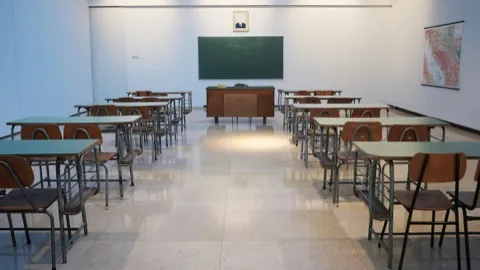
Schools need security that is visible but non-threatening: protection for students and staff without turning the campus into a fortress. That balance is the whole design problem. A gate that nobody can pass is easy; a campus that stays welcoming to parents while still accounting for everyone on it is the harder brief, and it is the one that actually keeps children safe.
A professional security agency helps in five specific ways.
1. Guards and campus patrol
Trained security guards patrol the campus, monitor cameras and keep an eye on visitors. What that training should actually cover is set out in the security guard training and skills guide. Their job is to deter problems before they start and respond calmly when something happens.
For a school, the professional manner of the guard matters as much as the presence. A guard who knows the students and staff by sight spots the person who does not belong; a guard who only reacts to incidents is working with half the information. Staff and parents need to feel helped, not watched — on open days and at the school gate, the security team is often the first impression a family has of the institution.
Guard posts should be defined by task rather than by presence alone. At a school, that means a written post order covering the front gate, the visitor process, the arrival and departure peaks, and what to do about an unfamiliar adult on campus.
2. Campus risk assessment
A security provider starts by assessing the campus — the entrances, the perimeter, the places that are unobserved, the routines of arrival and departure. The safety plan is built on that assessment, not on a generic template.
The security risk assessment method applies here with a school’s own emphasis. Walk the site at the times that matter rather than the times that are convenient: the ten minutes before the first bell, the ten minutes after the last, and after dark. Look for the places a child could be out of sight, the side gates left open for a shortcut, the delivery yard shared with pedestrian routes, and the blind spots created by new buildings or storage.
3. Lighting and visibility
Dark areas and walkways are where incidents happen. Automated, programmable lighting improves visibility and deters activity after hours, and it is a low-cost, high-impact measure for most campuses.
Good lighting also supports the guards’ own work. A camera whose view is defeated by glare, or a walkway nobody patrols after dark, is a control that exists on paper and not in practice. Review lighting alongside camera coverage so the two reinforce each other rather than leaving each other’s gaps.
4. ID and visitor control
The most important control at a school is the front door. ID policies for staff and students, plus a visitor check-in process, mean everyone on campus is known or accounted for. The security team runs the entrance as the controlled point rather than an open gate.
In practice this means one designated visitor entrance, a sign-in that records who is on site and when they left, badges for visitors that make an unescorted stranger obvious, and a rule that contractors are escorted rather than left to find their own way. The test is simple: at any point in the school day, could the office produce an accurate list of who is on the premises?
5. Cybersecurity awareness
Schools hold sensitive data on students and staff, and staff are often the entry point for an attack. Under India’s Digital Personal Data Protection Act, 2023, that data carries obligations as well as risk. A security agency supports the school’s own IT discipline — awareness of the risks and the basic habits that prevent them — rather than replacing the school’s IT function.
The physical and digital sides meet in a few mundane places: who can reach a server cupboard, whether visitors can plug into the network, and whether documents with personal data are left where a visitor can see them. Those are campus problems as much as IT problems.
Working with the school’s own staff
The security team cannot run the school’s safety culture alone. Agree in advance:
- Who owns an incident — the security supervisor handles the scene and the perimeter; the school’s leadership handles students, parents and communication.
- How the front office reaches the guards — a radio or direct line, not a walk across the campus to find someone.
- What guards are not asked to do — supervising children, administering discipline or acting as receptionists. A guard distracted from access control is where the gap opens.
- How arrival and departure peaks are staffed — the same ten minutes every day, and the point at which a school is most exposed.
What to look for in a school security provider
- PSARA licence for the state — the non-negotiable first check, under the Private Security Agencies (Regulation) Act, 2005
- Guards trained for the school environment, including how to de-escalate with children and parents
- A supervisor who owns the campus, not just a roster of guards
- A plan that covers arrival and departure peaks, the perimeter, and the entrance
- Evidence they have secured educational premises before — the failure modes are not the same as a warehouse’s
For the full vendor checks, see the guide to choosing a security agency and the compliance and licences page.
Frequently asked questions
Where should a school start if the budget is limited?
At the front door. Controlled visitor entry, a sign-in that records arrival and departure, and staff who know who is on site address the highest-consequence risk for the least money. Camera and lighting upgrades can follow the assessment rather than lead it.
Do schools need uniformed guards?
Uniformed, professionally trained guards are usually the right default for the perimeter and the gate, because visible deterrence is the objective and staff and parents can identify who to approach. What matters more than uniform is training: someone briefed on safeguarding, de-escalation and how to handle a parent in distress behaves very differently from an untrained guard.
How do we handle custody disputes and unauthorised collection?
With a written procedure agreed with school leadership, a current list of authorised adults, and a single point of escalation. The guard’s role is to control access and delay the situation at the gate while the school takes the decision — never to make the judgment call alone.
Should guards be involved in emergencies and drills?
Yes. Fire drills and lockdown exercises should include the security team, because their first actions in a real incident will be the ones they have practised. Exclude them from the drill and you have tested a plan that assumes someone else is watching the door.
How is campus security different from site security at a factory or warehouse?
The threat mix and the tolerance for intrusion are different. Schools carry a much lower tolerance for a hostile or unfamiliar person being present, so identity and access control dominate. Asset theft and cargo loss, which drive industrial security, matter far less. A provider experienced only in industrial sites will usually over-weight technology and under-weight the door.
The bottom line
School security is a layered discipline: controlled access, visibility, trained and present guards, and a plan built on the campus’s real risks. The agency’s job is to bring all four together. Ready to review your campus? Send us the campus layout and the current setup, and we will confirm the licence position and a security plan for your school.
Send the requirement
If this post points at a decision you are close to making, send us the scope — sites, roles and shifts — and we will confirm the licence, supervision and commercial position for your situation.
Discuss your requirement