
Employee outsourcing and flexible staffing: a guide
How to decide between permanent hires, flexible staffing and full employee outsourcing — assess the need, understand when contract staffing fits, and what a provider should take off your plate.
By Knighthood Team
Published 26 April 2024
Updated 17 October 2026
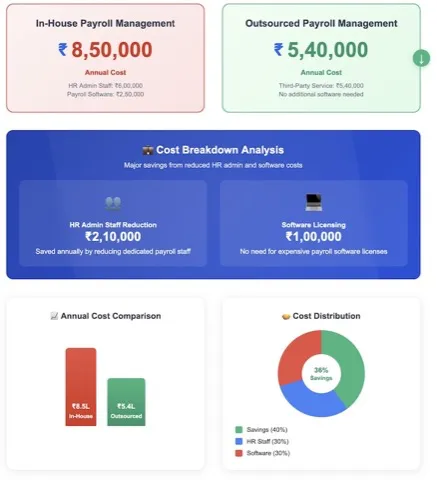
When you need to grow a workforce, you have three broad options: hire permanent employees, bring in flexible or contract staff, or outsource the running of the workforce to a staffing provider. A fourth variant — gig work arranged through a platform — is often sold as the flexible alternative to all three; the gig economy comparison covers what it actually costs. Each has a cost and a compliance profile, and the right choice depends on what you actually need. This guide walks through the decision.
Step 1 — Assess the staffing need first
Before choosing a model, work out what the business needs from its people.
- Map current roles and skills against your objectives. Where are you overstaffed or understaffed?
- Identify skill gaps — roles that need specialists, and whether you need them permanently or for a defined period.
- Understand the demand pattern — steady, seasonal (festive peaks, project surges) or uncertain. A stable core is a candidate for permanent or outsourced staffing; a spike is a candidate for flexible staffing.
- Be realistic about your own capacity — a small team that has to run recruitment, payroll and compliance alongside its real work will drop some of it.
Step 2: When flexible and contract staffing fits
Flexible staffing is the practice of bringing in staff for the work you need, for the duration you need it, with a staffing provider as the employer. It fits when:
- Demand fluctuates — seasonal or project peaks, where a permanent headcount would leave you overstaffed for half the year.
- The role is time-bound — a project, a launch, a transition, a known end-date.
- You need a skill fast — a provider with an existing talent pool and rapid hiring beat the time and cost of an in-house search.
- You want to evaluate before committing — contract-to-hire lets you judge performance before a permanent offer.
- You are a startup or small business — where a full HR function is overhead you do not yet have.
Because a provider employs the workers, the provider carries the statutory obligations — wages at or above the state’s notified minimum under the Code on Wages, 2019, provident fund, ESI, bonus and gratuity — and adjusts them when the rules change. You pay for the work done, and the compliance burden sits with the agency rather than with you. The employment compliance guide explains why that matters. For the narrower call — contract versus permanent for one specific role — see contract staffing vs permanent hiring.
Step 3: When full employee outsourcing fits
Employee outsourcing goes a step further: a provider manages the workforce end to end — recruitment, onboarding, payroll, compliance, day-to-day HR — as your extended team. This fits when you want the workforce without the function, and when your focus belongs on the business itself.
Outsourcing is not free of work — a contract with defined service levels and reporting is the difference between an accountable partner and a supplier. But for a business with no internal HR and a growing headcount, it removes the recurring administrative load that otherwise lands on the people doing the actual work.
Step 4: What to check before signing
Whatever the model, check the provider on:
- Compliance track record — can it show how it keeps wages, PF and ESI current, and does it treat itself as the employer in the contract? If you engage contract labour on site, the employer’s guide to contract labour compliance sets out what that makes you responsible for now that the Contract Labour Act, 1970 has been repealed.
- Payroll and reporting capability — what does the provider show you day-to-day, and can it produce what you need?
- Vetting — what is the screening process, and what background checks are run?
- Transparency — a clear fee structure, a named account manager, and service levels you can hold it to.
For the full selection process, read how to choose a staffing agency. For the cost picture on security and facility workforces, see what a security guard costs and the labour-cost calculator, and for the facility side of the same decision, commercial housekeeping services.
The bottom line
The right workforce model is the one that matches the demand pattern and the compliance burden you can carry. Assess the need, use flexible or contract staffing where the work is time-limited, outsource where the workforce function is overhead, and check compliance and transparency before you sign.
If you are planning a workforce, send us the roles, the demand pattern and the sites, and we will confirm the staffing model and commercial position for your situation — see staffing services and payroll services.
Frequently asked questions
What is the difference between flexible staffing and full outsourcing?
Flexible staffing supplies people for a defined need while the provider employs them; you direct the work and pay for it. Full outsourcing hands the provider the whole workforce function — recruitment, payroll, compliance, day-to-day HR. The first buys capacity for a period; the second buys the function itself. Businesses often start with the first and move to the second when HR stops fitting inside anyone’s week.
Who is the employer of record, and why does it matter?
It should be the provider, and it should say so in the contract. The employer of record carries the wage, provident fund, ESI, bonus and gratuity obligations and answers for them in an inspection. If the contract is silent or reads like a supply arrangement, the risk can land back on you as the principal employer — which is the outcome outsourcing was supposed to prevent.
Does outsourcing remove my compliance liability?
It moves the employment obligations to the provider, which is most of what you were trying to escape. It does not make you invisible: where contract labour works on your premises, the law still places duties on the principal employer, and your own safety, premises and reporting responsibilities remain yours. Get a written allocation of responsibility rather than assuming a clause covers it.
What should the contract contain?
A named employer of record, the scope and headcount, the wage and statutory build-up, a service level with reporting you actually receive, the fee structure, and an exit route. Add the practical terms people forget: how headcount changes are priced mid-term, how a wage notification is passed through, what happens when a worker must be replaced, and who holds the statutory records.
How do I compare a staffing quote with hiring directly?
Put the same roles, shifts and locations on both sides. Direct hiring means recruiting, onboarding, payroll software, an HR owner, and the statutory costs — the state minimum wage plus provident fund, ESI, bonus and gratuity. The staffing quote bundles those plus a service charge. Compare the two complete figures, not the agency fee against a salary.
When should I keep the workforce in-house instead?
When the work is core to what you do, the demand is steady, the roles need deep company knowledge, and you already have an HR function that can run recruitment and payroll well. Outsourcing is a poor fit for roles where continuity of relationship is the product — it is a good fit for volume, shift-based and seasonal work.
Send the requirement
If this post points at a decision you are close to making, send us the scope — sites, roles and shifts — and we will confirm the licence, supervision and commercial position for your situation.
Discuss your requirement