
Event security: how to hire the right team
A practical guide to hiring security for an event — what event security does, how to assess the risks, and the checks to run on a provider before you staff the day.
By Knighthood Team
Published 21 February 2023
Updated 14 October 2026
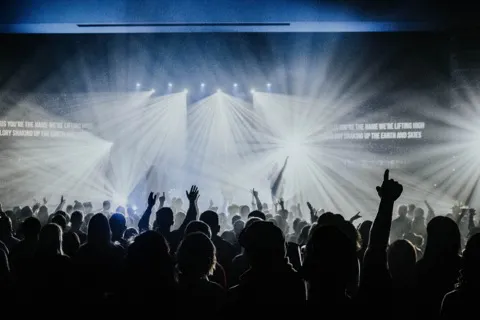
Event security protects your staff and attendees and lets people enjoy the event instead of worrying about their safety. Guards deter crime and misbehaviour, control crowds and access, and respond when something goes wrong. Hiring the right team is a matter of assessing your event’s risks, then checking the provider against them. For the full planning sequence — venue inspection, access control, crowd management and contingency planning — see event security planning.
First, assess the event’s risks
Before you hire anyone, work out what protection the event actually needs. Different events carry different risks, and the security plan should match them. Ask:
- Is it indoors or outdoors, and is bad weather a factor?
- Could there be a medical emergency, and how will it be handled?
- Will high-profile guests be present who need dedicated protection?
- Will alcohol be served?
- Is theft or vandalism a realistic concern?
- Is the event controversial enough to attract protest or confrontation?
- What access control is needed — and are bags checked or items prohibited?
- What crowd size and crowd-control demands come with the event?
Once the risks are clear, you can specify the staffing and equipment needed rather than guessing.
Then check the provider
Use these checks to make sure you are hiring a team that can actually handle your event.
1. Choose qualified, licensed officers
Your guards need to be trained and equipped to handle difficult situations calmly. Confirm the agency holds the required PSARA licence for the state (see compliance and licences), and that the officers assigned have training and a track record — guards with a military or police background are often better at recognising hazards and staying composed under pressure.
2. Work with a full-service team
Large events need more than a few guards. Prefer a single provider that can supply the full set — unarmed and armed guarding, personal protection where needed, surveillance and monitoring — rather than assembling several separate vendors. One accountable team keeps coordination and communication under one roof.
3. Choose a team experienced with your event type
A provider that only staffs concerts may not fit a conference, a wedding or a corporate offsite. Ask whether they have run security for your kind of event and attendance size. Experience with your event type means they already know its failure modes.
4. Assess the venue
The venue drives the plan. Your security team should view the site and decide where guards are posted, where the vulnerable access points are, and what special circumstances (loading docks, entry choke points, emergency exits) need planning. A partner that quotes without seeing the site is not planning.
5. Specify your expectations
Be explicit about what matters: armed or unarmed? Which concerns are top priority? How do you want incidents reported? The team should know what you expect of them and what the priorities are before the event, not during it.
6. Demand clear communication
A credible provider keeps an open line with you from planning to the last guest leaving. They should answer questions, surface problems before they escalate, and keep you informed about security throughout the event.
The bottom line
Safety cannot be left to chance at an event, whatever its size. The right team protects your guests and gives you peace of mind — but only if it is licensed, trained, experienced in your event type and prepared to plan the venue, not just supply bodies.
Budget for it the same way you would permanent guarding: event work is priced per event, but the underlying cost build-up of wages and statutory contributions is the same — the state minimum wage for the role, plus provident fund and ESI on the applicable wages. If you are comparing providers, run the checks in the security agency selection guide before you book.
Ready to staff an event? Send us the dates, venue and expected attendance, and we will confirm the licence position and the right mix of guarding for your event.
Frequently asked questions
How many security guards does my event need?
The honest answer is that it comes from the risk assessment, the venue and the expected attendance — not from a per-head rule of thumb. Crowd size and flow, number of entry points, whether alcohol is served, the guest profile and the event’s public profile all move the number. Anyone quoting a headcount before walking the venue is guessing.
What does event security cost?
Event work is priced per event, based on the duration, the location and the risk profile, with the officers paid the state’s notified wage for their skill level. The components underneath are the same as permanent guarding — wage, statutory contributions and the agency’s service charge — so the way to sanity-check a quote is to ask for that build-up rather than a lump sum.
Does an event security team need a licence in India?
Yes. A private security agency must hold a licence under the Private Security Agencies (Regulation) Act, 2005 for each state where it deploys officers, including for a one-day event. Ask for the licence and the state it was issued in, and check that it covers the state your venue is in.
How far in advance should I book event security?
For a mid-sized event, three to four weeks gives the provider time to inspect the venue, plan the deployment and roster officers. Larger public events, or dates in a busy wedding or conference season, need longer, and a booked team should still do a venue walk-through in the week before — a plan written without seeing the site is not a plan.
Which tasks should security take, and which should event staff keep?
Security owns access control, screening, crowd flow, incident response and the decision to refuse entry. Your own staff should not be asked to search bags, break up a confrontation or escort someone out — those tasks need trained officers with the authority and the insurance behind them. Keep event staff on guest experience and let security handle the enforcement.
What happens if something goes wrong on the day?
There should be a written escalation path: who the officer reports to, who calls the police or an ambulance, who talks to the venue, and who decides whether to pause or stop the event. Agree it before the event and brief both teams, because decisions taken in the middle of an incident go better when they were already rehearsed.
Send the requirement
If this post points at a decision you are close to making, send us the scope — sites, roles and shifts — and we will confirm the licence, supervision and commercial position for your situation.
Discuss your requirement