
Warehouse security guide: protecting your assets and people
A practical guide to securing a warehouse — the threats to defend against, the layered controls that protect it (perimeter, access, video, guarding, fire), the operating procedures that make them work, and the questions buyers should ask a provider.
By Knighthood Team
Published 10 April 2024
Updated 24 August 2026
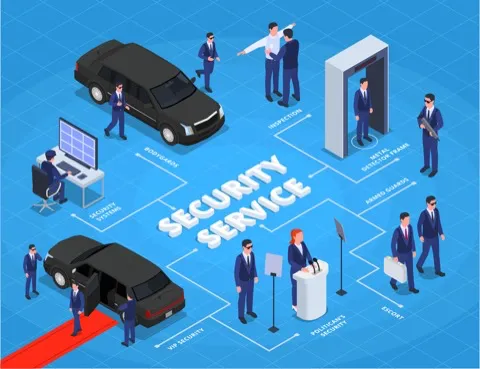
A warehouse concentrates value in one place: stock, machinery and goods in transit, with people coming in and out all day. That combination makes it a target. Theft and loss can come from outside (burglary, cargo theft) or from inside (employee theft, collusion with drivers), and the same facility carries real safety hazards. This guide sets out the threats, the controls that protect a warehouse, and the procedures that make them work day to day.
For the day-to-day lists, see the separate warehouse security checklist and warehouse security management guides.
The threats you are defending against
Warehouses lose money in a few predictable ways:
- Employee theft — the most common loss, ranging from petty pilfering to organised internal theft. It goes undetected without inventory controls and monitoring.
- Cargo theft in transit — goods leaving the facility are vulnerable, especially when delivery drivers can wander freely during loading and unloading.
- Walk-in theft and burglary — when entry and exit points are not tracked and visitor and staff credentials are not checked, thieves can walk in during busy hours and leave with goods. Break-ins and vandalism hit after hours.
- Fire and accidents — electrical faults, flammable materials and poor procedures can destroy stock and endanger people.
- Administrative gaps — weak induction and training, no visitor policy, and untracked inventory make every other risk worse.
The common thread: losses come from both outsiders and people already inside, so a single measure is never enough. Protection has to be layered.
The layers of protection
Perimeter and entry points
Start at the boundary. Guard the gates and doors, and make the perimeter an obvious deterrent:
- Fencing and clear signage around the property line, plus adequate lighting in parking lots, entryways and loading areas.
- Protected entry points — keep employee and visitor parking away from shipping and receiving doors, and control which doors are in use.
- Well-lit docks and loading areas — lighting works as a deterrent and helps any security personnel actually see.
Access control
Access control is the first line of defence once someone is at a door. The reliable version is modern and logged, not a key in a drawer:
- Keyless, cloud-based systems with smartphone credentials instead of cards and fobs — manage permissions by zone and adjust door schedules remotely.
- Access logs for every door — who entered, when, and with which credential, so incidents can be investigated.
- Custom alerts — a door left ajar, a repeated failed credential, or an unauthorised after-hours entry raises a text or email to the person who owns the response.
- Employee ID badges — a visible badge identifies staff and makes anyone without one stand out; the ID is also the basis for gate management.
For the full picture of how access control works in practice, see the access-control section of the security risk-assessment guide and the security services page.
Video monitoring
Video gives you eyes on the inside and outside. Useful systems combine:
- Cameras at key ingress and egress points and around high-value areas, monitored and recorded around the clock.
- Retention and remote access — footage stored so thieves cannot destroy the evidence by breaking into the security room, and reachable from anywhere for review.
- Integration with alarms — a camera that verifies an alarm event in real time cuts false alarms and speeds the right response.
- Analytics — the smart step that turns video into detection rather than just evidence. For how analytics works in practice, see video analytics for security.
Professional guarding
Technology needs people. Guards on site at a warehouse are responsible for:
- Monitoring entry and exit of people and vehicles, checking credentials of staff, visitors and delivery drivers.
- Responding quickly to incidents — a leak, a fire, or an accident involving employees.
- Making rounds, checking inventory condition, and enforcing the closing procedure.
- Deterring and catching theft, and reporting to you and the police when it happens.
- Being the visible, welcoming presence at the gate — often the first impression visitors get of the company.
Guards and a working alarm-and-camera system reinforce each other; a guard with no technology is blind, and technology with no response plan is just footage.
Fire and emergency
Fire protection should be designed in when the access system is installed. Choose a suitable alarm, integrate it with the central system, and make sure the response path is clear — guards alerted, fire department notified, evacuation followed. Keep escape and emergency routes part of the plan, and train staff on what to do.
Operating procedures that stop loss
Controls work only when people follow a routine. The procedures that consistently make a difference:
- Separate shipping and receiving areas with physical barriers, and control outbound shipments.
- Keep drivers and visitors out of the warehouse — provide a driver’s lounge, do not let drivers wander.
- Lock and store smartly — high-value items in lockable cages or rooms, with a two-man rule for the highest-value areas; keep external rubbish and recycle containers away from the building and locked.
- Run the closing procedure — check locks and cages, patrol for open windows or doors, confirm the facility is empty, then set the alarm.
- Verify who works there — background checks on warehouse staff, especially those handling small or high-value goods.
- Keep inventory visible — scan and track stock so movement is auditable, and connect the inventory system to access control and video where possible.
- Plan for emergencies — a written response plan for fire, theft, and incidents, with roles and escalation.
- Use the site to your advantage — the manager’s office with a direct view of the shipping and receiving bay doors costs nothing and deters a lot.
Frequently asked questions
What is the most common warehouse loss? Employee theft — it is the largest single source of loss, and it is easy to hide without inventory and access controls. Cargo in transit and walk-in theft follow.
Where should I start? Layered controls. Perimeter first (fencing, lighting, entry points), then access control with logs, then video and alarms integrated, then trained guards. Each layer reinforces the others.
Do I need guards if I have cameras? Cameras capture; guards respond and deter in person. For a site with high-value inventory or late-night activity, both are needed. The camera is evidence; the guard is the person who acts.
How do I stop drivers or delivery staff stealing? Restrict where they can go (a driver’s lounge, no wandering), control outbound shipments, and run the two-man rule for high-value areas.
What should I check before hiring a warehouse security provider? Verify the provider holds a PSARA licence for the state, that wages and statutory costs are compliant, and how supervision and reporting work. See how to choose a security agency and the cost of a guard.
Getting the plan and the price right
Warehouse security is a layered system, not a single product. Define the threats, layer the controls, and keep the procedures real — then confirm the commercial side: compliant wages and statutory costs for your state, plus the agency’s service charge. The labour-cost calculator prices a compliant guard for your state, and the security services page shows what an accountable partner delivers.
If you are securing a warehouse now, send us the site, the stock values and the risks you are managing, and we will confirm the licence position and the right mix of guarding, access control and monitoring for your facility.
Send the requirement
If this post points at a decision you are close to making, send us the scope — sites, roles and shifts — and we will confirm the licence, supervision and commercial position for your situation.
Discuss your requirement