
How to choose a security agency
A practical, step-by-step way to choose and hire a security agency — assess the need, verify the licence and compliance, understand the cost build-up, and check training, technology and reputation before you sign.
By Knighthood Team
Published 20 May 2024
Updated 14 October 2026
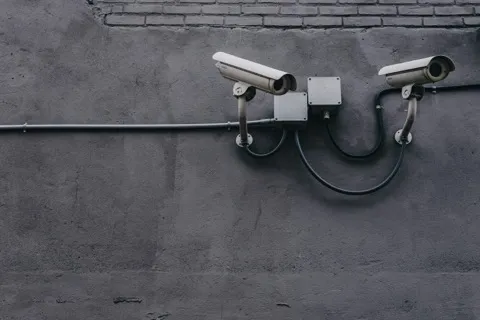
Choosing a security agency is a decision about the safety of your people and assets, so it deserves more care than picking the lowest number. The right process is a short due-diligence checklist: assess what you actually need, verify the agency is licensed and compliant, understand how the cost builds up, and check the things that show up only after you sign — training, technology, supervision and how the agency treats its own guards. The security guard training and skills guide covers what good training evidence looks like before you sign, not after.
This guide gives you that process in five steps, plus the questions to ask at each stage. If you are hiring guards for a single site rather than a whole contract, how to hire security guards in India covers the guard-level decisions.
Step 1 — Assess what you actually need
Before you compare agencies, write down the need. This stops you comparing offers that answer different questions.
- What are your security goals and the threats you are protecting against?
- What level of guarding is required — static, patrol, event, armed, or a mix?
- What is the size and complexity of the sites to be covered (posts, shifts, hours)?
- What regulatory and reporting requirements apply to your sites?
A clear brief lets you compare agencies on the same basis. An agency that has to ask you for your own risk picture before quoting is not doing the diligence for you.
Step 2 — Verify the licence and the compliance
The non-negotiable first check is licensing. In India a security agency must hold a valid PSARA licence for every state where it deploys — a licence granted in one state does not authorise guarding in another. Ask for the licence and check it against the issuing state’s record.
Beyond the licence, the compliance that matters is the one hidden inside the quote:
- Does the agency pay minimum wages to the state’s current notification, plus provident fund, ESI, bonus and gratuity?
- Does the contract treat the agency as the employer, so the statutory responsibility sits with them rather than with you as principal employer — which is what the Contract Labour (Regulation and Abolition) Act, 1970 looks at when it decides who answers for the workforce on your site?
An itemised quote that shows PF, ESI and bonus as separate lines is the sign of a compliant operator. A single bundled number is the sign you are about to absorb the risk. For the full picture see the compliance and licences page and the due-diligence guide.
Step 3 — Understand the cost build-up, not the headline
The price you are quoted is three things added together: the wage, the statutory costs on that wage, and the agency’s service charge. If you compare only the headline, you cannot tell whether a low quote is a good deal or a missing compliance line.
- Basic wages vary by state and skill level.
- Statutory costs (employer PF, ESI, bonus, gratuity) add roughly a quarter to a third to the wage.
- Service charge typically runs 6–10% of the total and covers recruitment, training, supervision and reporting.
Use the labour-cost calculator to work out the compliant labour cost for your state and wage, and read what a security guard costs for the full breakdown. Then compare each agency’s build-up, not its headline.
Step 4 — Check training, experience and reputation
Because the guard is the service, the agency’s training and its people matter more than its brochure.
- Training — what does the agency actually train on (emergency response, access control, customer service, report writing, use of technology)? Does supervision come from experienced people, such as ex-military or police background? Are guards trained at recruitment and re-trained after?
- Experience — years of operation, number of sites managed, and the industries served. An agency that only staffs one kind of site may not fit yours.
- Reputation — talk to existing customers, not just online reviews. Ask about responsiveness when something went wrong, and about how the agency handled incidents.
Step 5 — Evaluate technology, reporting and supervision
Modern security is more than a guard at a gate. Assess whether the agency provides the operating layer:
- Access control and visitor management
- Surveillance with analytics, and remote / patrol monitoring
- A reporting system that shows you, day-to-day, attendance, exceptions and incidents
- A supervisor/field-officer layer who is accountable, not just a roster of guards
The important question is not whether the agency owns gadgets, but whether its technology produces reports you can act on and whether a named supervisor owns the result.
Step 6 — Review the contract terms
Before signing, be clear on:
- The scope — posts, shifts, hours and what happens when headcount changes
- The commercial terms — the build-up, how the statutory components are handled, and how wages are adjusted when state minimum wages are revised
- Renewal and exit — notice periods, replacement of guards, and handover
- Proof of compliance — the agency should be able to show PF and ESI submissions
The checklist
| Check | What to verify |
|---|---|
| Licence | Valid PSARA licence in every state of deployment |
| Compliance | Minimum wage + PF, ESI, bonus, gratuity; proof of submissions |
| Cost | Itemised build-up (wages + statutory + service charge), not a single number |
| Training | Real, supervised training; qualified supervisors |
| Experience | Years, sites managed, industries served, references |
| Technology | Access control, analytics, monitoring, reporting |
| Supervision | A named supervisor accountable for the site |
| Contract | Clear terms for headcount change, wage revision and exit |
Why engage a professional agency at all
Before the checklist, the prior question: why not hire guards directly? A professional agency buys you more than a roster. Its officers are a visible deterrent, a trained pair of eyes and ears, and a customer-service presence — and in an incident, every second between detection and response counts. Professional agencies train guards for that, from crime prevention and de-escalation to handling emergencies while police or medical help arrives. What you are paying the service charge for is that reliability: someone who contains a situation fast instead of waiting for it to escalate.
The value only exists if the agency actually delivers it. That is what the checklist below verifies.
Ask for visibility, not a black box
It is easy to sign a contract, see the guards, pay the invoices and trust that everything is handled — and impossible to know whether patrols are completed on time or protocols are being followed. If your provider cannot show you the process, you are paying for a presence and hoping for a result.
Before you sign, ask what you will actually see day to day: patrol completion records, incident reports, attendance and exceptions, and the reporting cadence. A provider that treats security as a measurable, reported process rather than a black box is the one whose contract you can audit. The section on technology and reporting above covers the questions to ask.
Related reading
- How much does a security guard cost? — the full statutory cost breakdown and a worked example
- Labour-cost calculator — price a compliant build-up for your state and wage
- Due-diligence guide and compliance and licences — the deeper vendor checks
- Security services — what to expect from an accountable security partner
If you are weighing agencies now, send us your sites, shifts and roles and we will confirm the licence position, the compliant build-up and the service charge for your contract.
Frequently asked questions
What is the first thing to check about a security agency?
The licence, before the price. A private security agency must hold a valid PSARA licence for each state where it deploys officers, and a licence from one state does not cover another. It is the one check that cannot be remedied after the fact: without it, the deployment itself is unlawful and the contract is exposed. Ask for the licence number and the issuing state in your first conversation.
How do I verify a PSARA licence?
Get the licence number and the issuing state from the agency, then check it with that state’s controlling authority — the licensing function normally sits with the state Home Department or the police licensing authority. Do not stop at a photocopy, because a photocopy proves only that a document exists. If a provider is evasive about which state issued its licence, that is an answer in itself.
Should I pick the lowest quote?
Not without reading what is missing from it. A quote that lands below the state’s notified wage is either leaving out a statutory component or not paying the wage floor, and either way the shortfall comes back to you as arrears, a labour dispute or an inspection finding. Compare the build-up — wage, statutory costs, service charge — rather than the monthly total, and treat an unexplained low number as a question to ask.
What should the contract say about wage revisions?
That the rate adjusts when the state notifies a new minimum wage, and how quickly. Without that clause you either absorb the increase silently or find yourself paying below the floor months later. It should also say who bears the cost of a revision and from which date, and how the change is reflected in the invoice — because the notification is effective from a date, not from the day someone reads it.
What is a reasonable service charge?
Expect the agency’s fee to sit on top of wages and statutory costs rather than inside them, typically in the region of six to ten percent of the total. That fee funds recruitment, training, supervision, uniforms and reporting. A charge far below that range is not a bargain — it is either a thinner supervision layer than you were promised or a component that has been quietly removed from the build-up.
How do I compare two agencies fairly?
Give both the same written brief — sites, posts, shifts, hours and any regulatory or reporting requirement — and ask each for the same output: an itemised build-up, the licence details, the training content, the supervisor’s role and the reporting you will receive. Agencies answering the same question on the same basis are comparable. Agencies quoting on different assumptions are not, however tidy the spreadsheet looks.
Send the requirement
If this post points at a decision you are close to making, send us the scope — sites, roles and shifts — and we will confirm the licence, supervision and commercial position for your situation.
Discuss your requirement